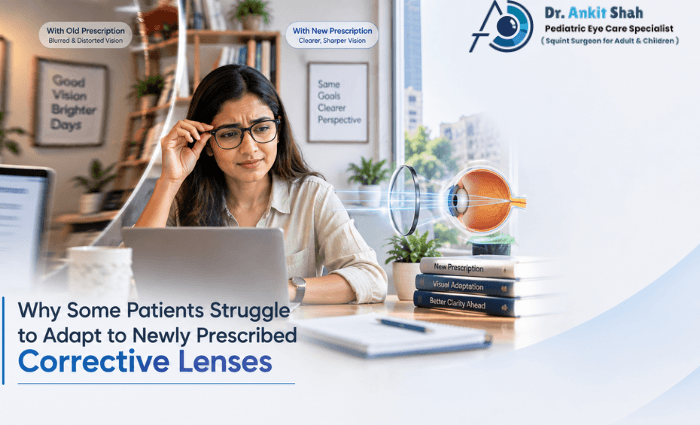

Why Some Patients Struggle to Adapt to Newly Prescribed Corrective Lenses
Wearing a new set of glasses will definitely bring improvements to your vision, but there are those who cannot adjust to wearing glasses with a new prescription. It may take time before one can get used to seeing things in a certain way because of the new prescription. There might also be some discomfort felt in the form of strain, headaches, dizziness, or even seeing things in a strange way.
Refractive error correction mainly aims at addressing the issue of abnormal visual processes by correcting the problems associated with refraction, such as myopia, hyperopia, and astigmatism.
It is necessary for patients to know the reason behind this so that they will be able to distinguish between the normal and the abnormal visual processes.
Why Can New Glasses Feel Unusual?
The visual system adjusts to the specific prescription of the glasses if the glasses are consistently worn. The brain gets visual information slightly differently if the prescription of the glasses is changed.
This might be more evident if the change in the power of the lenses is quite significant. For instance, the new prescription of astigmatism correction can alter the appearance of straight lines and shapes of objects.
However, this is not necessarily indicative of any problem with the glasses. Often, the visual system adjusts to the new prescription.
What Symptoms Can Occur?
Individuals can have various symptoms when adapting to their new glasses. These can include the following:
- Headaches
- Fatigue of the eyes
- Dizziness
- Visual distortion
- Problems with depth perception
- The sense that things are appearing different in size or position
Several factors such as the type of lens, the change in the prescription, the position of the frame, and the individual’s visual needs can impact the adaptation process.
The minor symptoms can become resolved once the visual system adapts to the new glasses. However, serious symptoms should be seen by professionals.
Why Does the Size of the Prescription Change Matter?
A slight adjustment in the prescription will not seem much different to you, but a large prescription change will require some more time to adjust.
For instance, the individual who has been wearing an old prescription for a few years now may have adjusted his vision with lenses that do not correct his refractive error. After the prescription is changed, he or she may find the sharpness strange.
It does not always mean that there is something wrong with the refractive error correction. But in case of persistent discomfort, one should recheck the prescription and the fit of the lenses.
Could the Problem Be With the Glasses Rather Than the Prescription?
It is not always the issue with the prescription alone that makes adaptation difficult for the individual. The placement of the lenses before the eyes, frame fit, measurements, and optical center are among those that can contribute to problems with vision.
In case the glasses are placed incorrectly, or if the lenses were made in a different way than was prescribed, the person will have trouble adapting to wearing them.
This is one of the areas where a refractive error specialist can make an assessment based on the prescription and other issues related to vision.
What About Refractive Errors in Children?
In addition, the use of a new prescription may require time for adjustment in some cases. Refractive errors in children need special consideration since visual development is associated with good eyesight.
It may not be easy for the kid to tell his parents the discomfort he feels wearing the glasses. The parents shall know this by virtue of the fact that the kid removes the glasses, squints and has headaches, among other visual problems.
Pediatric refractive error treatment may include wearing of glasses, depending on the age and prescriptions of the child.
It is important for regular monitoring to be done because the child’s prescriptions can vary as the eyes continue developing.
When Should You Return for an Eye Examination?
It is not always the issue with the prescription alone that makes adaptation difficult for the individual. The placement of the lenses before the eyes, frame fit, measurements, and optical center are among those that can contribute to problems with vision.
In case the glasses are placed incorrectly, or if the lenses were made in a different way than was prescribed, the person will have trouble adapting to wearing them.
This is one of the areas where a refractive error specialist can make an assessment based on the prescription and other issues related to vision.
How Can the Adjustment Process Be More Comfortable?
It is expected that they will follow the instructions they were given on how to use the new glasses from the eye care practitioner. The consistent use of the glasses would allow the vision system to get used to the new prescription.
An important point when it comes to wearing glasses is the proper fitting of glasses along with keeping them clean. The person should not constantly alternate between the two types of glasses due to discomfort.
In the case of children under pediatric refractive error treatment, the parent should try to encourage regular wearing of the prescribed glasses.
When Professional Guidance Is Needed
While adaptation to any prescription is possible, this process varies from patient to patient. However, refractive error correction needs to ensure clarity and comfort, and in case of problems, this issue should be addressed, not ignored.
Myopia, hyperopia, and astigmatism are all refractive errors that might require distinct approaches for correction. Moreover, in cases involving children, the entire process necessitates extra care concerning their evolving vision and the alterations that can occur during development.
Dr. Ankit Shah performs eye examinations and provides refractive correction with special attention to the development of children’s vision and their visual needs. Due to his expertise in pediatric ophthalmology, refractive issues can be considered along with other possible eye conditions in a child.
If you or your child cannot get used to recently prescribed glasses or suffer from blurred vision and visual discomfort, make an appointment with Dr. Ankit Shah for eye examination.